Top 10 Types of Solar Panels and Their Benefits

Choosing solar panels is no longer a simple choice between blue and black modules. Today’s market includes monocrystalline, polycrystalline, thin-film, PERC, TOPCon, HJT, bifacial, and emerging perovskite designs. Each type responds differently to sunlight, heat, limited roof space, shading, and installation costs.

This guide examines ten major solar panel types and explains where each one performs best. It considers efficiency ratings, temperature behavior, durability, appearance, and expected maintenance. It also explores the practical benefits of solar panels, including lower electricity bills, improved energy independence, and reduced reliance on fossil fuels. However, results depend on roof direction, local weather, electricity prices, and system design.

Real projects often reveal details that product brochures overlook. A high-efficiency panel may be valuable on a small roof, while a cheaper module may suit a large warehouse. Bifacial panels can produce more energy with reflective ground surfaces, but their advantage may shrink on dark rooftops. Thin-film modules can perform well in heat, although they usually require more space.

There is no universal winner.

Performance figures also deserve careful reading. Laboratory efficiency does not always match annual household output. Independent testing, installer experience, product warranties, and recognized standards such as IEC certification can support better decisions. Some newer technologies still need longer field histories. That uncertainty matters.

The following comparison highlights the strengths, limitations, and suitable applications of each panel type. It aims to make technical choices clearer, more realistic, and easier to discuss with a qualified solar professional.
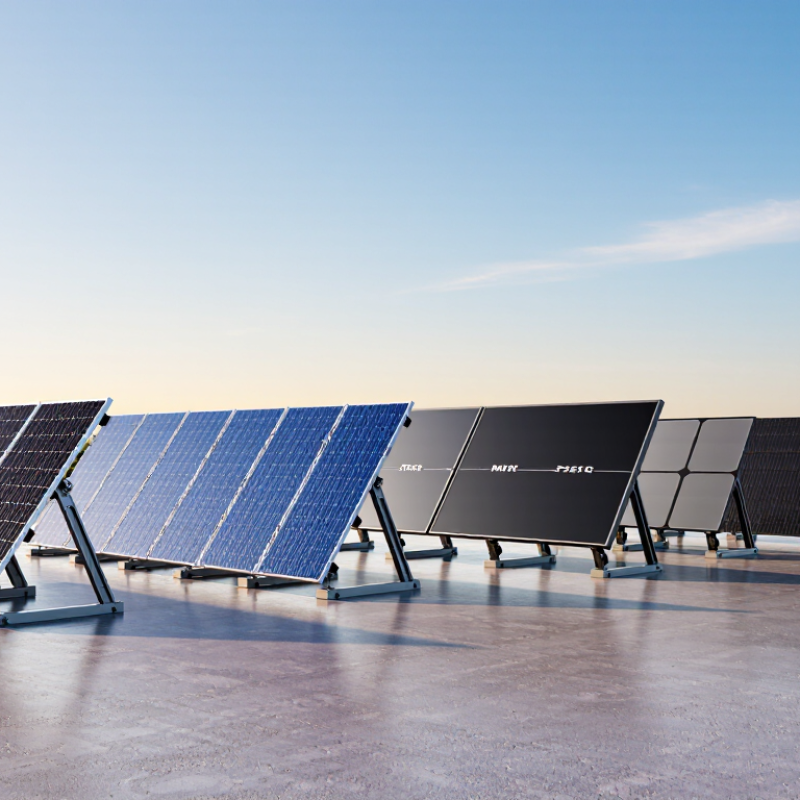
Top 10 Types of Solar Panels and Their Benefits

What Solar Panels Are and How Their Main Features Differ

Top 10 Types of Solar Panels and Their Benefits

Solar panels use photovoltaic cells to turn sunlight into electrical current. Their main features differ in efficiency, heat response, weight, flexibility, and service life.

Monocrystalline panels usually deliver high efficiency in limited roof space.
Polycrystalline panels can cost less, but often need more area.
Thin-film panels are lightweight and perform steadily in weak light.
Amorphous silicon is flexible, though its efficiency is commonly lower.
Cadmium telluride panels can perform well in hot conditions.
CIGS panels suit some lightweight or curved surfaces.

The remaining types describe cell designs or construction methods.

Bifacial panels collect light from both sides, especially above bright ground.
PERC cells improve light capture with a rear passivation layer.
TOPCon cells reduce electrical losses through advanced contact layers.
Heterojunction panels combine different silicon technologies for strong efficiency and temperature performance.

These categories can overlap; a bifacial panel may also use TOPCon cells.

A roof inspection matters more than a ranking. A shaded chimney can reduce output across a connected string. High summer temperatures can also lower real-time production. Check the panel’s temperature coefficient, product warranty, degradation rate, and tested output under standard conditions.

Weight matters on older roofs. Glass thickness and frame design matter in windy areas. A neat laboratory rating can mislead. I would not select the highest-efficiency panel automatically.

Roof direction, local weather, installation quality, and future maintenance often matter more. Some manufacturers publish limited field data, so independent testing deserves careful attention.
The Top 10 Solar Panel Types by Design and Technology

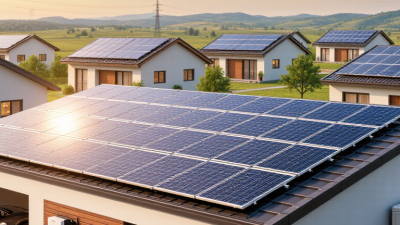
Solar panels differ mainly in cell architecture, materials, and manufacturing maturity. The ten leading types are monocrystalline PERC, n-type TOPCon, heterojunction, interdigitated back-contact, polycrystalline silicon, cadmium telluride, CIGS, amorphous silicon, perovskite, and perovskite-silicon tandem modules. Monocrystalline PERC remains familiar and cost-effective, while TOPCon reduces rear-side electrical losses. Heterojunction combines crystalline silicon with thin layers, improving temperature performance. Back-contact cells move electrical contacts behind the cell, creating a cleaner front surface. Polycrystalline modules usually sacrifice efficiency for simpler production.

Thin-film designs behave differently. Cadmium telluride performs well in hot conditions and uses less semiconductor material. CIGS can support lightweight, flexible modules, although manufacturing consistency remains challenging. Amorphous silicon works in low light but needs more area. Perovskite cells are promising, yet long-term outdoor durability still requires stronger evidence. Tandem cells stack materials to capture more sunlight across different wavelengths. They are technically impressive, but not yet ordinary rooftop products.

The IEA PVPS Trends 2024 report states that crystalline silicon represented about 98% of global module production in 2023. That figure shows commercial dominance, not automatic superiority. Fraunhofer’s Photovoltaics Report 2024 places leading commercial module efficiencies around the low-to-mid 20% range, while laboratory tandem cells perform considerably higher. Laboratory results can look dazzling. Real roofs are less forgiving. Shade, dust, heat, wiring, and installer quality can erase paper advantages. The International Technology Roadmap for Photovoltaic, 2024 edition, also highlights rapid movement toward n-type architectures. Still, efficiency alone is an incomplete buying signal. A smaller panel may fit a difficult roof better, while a cheaper module may produce stronger lifetime value. The difficult part is knowing which claim survives twenty years outside.

Key Benefits and Limitations of Each Solar Panel Type

Top 10 Types of Solar Panels and Their Benefits

Monocrystalline panels offer high efficiency and strong performance in limited roof space. They usually cost more, and shaded areas can reduce their output.

Polycrystalline panels are more affordable and use simpler manufacturing processes. However, they need more space for similar power.

Thin-film panels are lightweight and flexible, but their lower efficiency may require larger installations.

Amorphous silicon panels perform reasonably in weak light. Their output and lifespan are often lower.

Cadmium telluride panels can perform well in hot climates and use less semiconductor material. Recycling requirements need careful planning.

CIGS panels are flexible and efficient for unusual surfaces, yet production quality can vary.

PERC panels improve light absorption through a rear passivation layer. They provide useful efficiency gains, but may experience greater heat-related losses.

TOPCon panels offer strong efficiency and better long-term performance. Their higher initial cost can challenge smaller budgets.

Heterojunction panels combine different silicon layers and work well in high temperatures. Installation and manufacturing are more complex.

Bifacial panels collect reflected light from both sides. They perform best above bright surfaces, not dark roofs.

Real-world results still depend heavily on orientation, ventilation, dust, and local weather.

Tips: Compare annual energy yield, not efficiency alone. Check temperature coefficients, warranty terms, roof loading, and recycling options.

Leave space for safe maintenance. A professional site assessment can reveal shading from chimneys or nearby trees.

I have found that attractive specifications sometimes disappoint when roof conditions are ignored. Even advanced panels cannot correct poor placement.

Performance estimates should include seasonal changes, because winter sunlight can be sharply weaker.

How Panel Efficiency, Cost, Durability, and Space Needs Compare

Choosing among the top 10 solar panel types means balancing efficiency, cost, durability, and roof space. Monocrystalline and polycrystalline panels remain practical options, while TOPCon, heterojunction, and interdigitated back-contact designs usually deliver higher efficiency. Thin-film families, including cadmium telluride, CIGS, and amorphous silicon, perform better on some large or irregular surfaces. Bifacial panels can produce extra electricity from reflected light. Perovskite and tandem panels show strong laboratory potential, but their long-term field evidence remains limited. Fraunhofer ISE’s Photovoltaics Report 2024 places many commercial silicon modules near 20–23% efficiency. That difference matters on a small roof.

Space changes the cost calculation. Higher-efficiency modules may reduce installation area, racking, and wiring needs, but they often carry higher upfront prices. Thin-film modules can cost less per unit, yet they may require more surface area for the same output. IEA PVPS Trends 2024 reports continued module price pressure, though system costs also depend on labor, inverters, permits, and grid connection. Cheap modules are not automatically cheap projects. That is easy to miss.

Durability deserves closer attention. A National Renewable Energy Laboratory analysis found typical crystalline-silicon degradation near 0.5% annually, although climate and installation quality can alter results. Bifacial gains also depend on roof brightness, tilt, and shading. A long warranty sounds reassuring, but it cannot replace verified field data. I would question any efficiency claim that ignores heat, dust, and winter shadows. Real roofs are less cooperative than laboratory tables.

Top 10 Types of Solar Panels and Their Benefits

Comparing panel efficiency, relative cost, expected service life, and space requirements

Values are representative industry midpoints for commercially available technologies, not brand-specific ratings. Efficiency is shown as a percentage, cost is an indicative relative index where 100 equals a conventional monocrystalline module, durability is the typical service-life range midpoint in years, and space is the approximate module area required per kW at standard test conditions. Bifacial output can increase with suitable rear-side light and installation conditions.

How to Choose the Right Solar Panel for Different Applications

Top 10 Types of Solar Panels and Their Benefits

How to Choose the Right Solar Panel for Different Applications

Choosing a solar panel starts with the site, not the product label. Monocrystalline panels suit limited roof space because they usually deliver high power from a smaller area. Polycrystalline panels can work well where roof area is generous and upfront cost matters. Thin-film panels are lightweight and flexible, making them useful on curved surfaces, façades, and structures with limited load capacity. They may need more space. That detail is easy to overlook.

For hot climates, temperature performance deserves close attention. Cadmium telluride and CIGS thin-film panels can perform steadily in some warm, low-light conditions. Amorphous silicon fits small devices and low-power installations, rather than most household roofs. Bifacial panels are valuable above bright ground surfaces, such as pale gravel or concrete. Their rear-side output depends heavily on mounting height and surface reflectivity. It is not automatic. PERC, TOPCon, and heterojunction designs can improve efficiency, but the best choice still depends on shading, roof direction, wiring, and inverter compatibility.

A farm may favor durable bifacial modules, while a compact apartment roof may need high-efficiency monocrystalline panels. For a portable system, thin-film construction can reduce weight. Check local weather records, roof strength, maintenance access, and expected electricity demand. A professional site assessment should include shade measurements across different seasons. Do not select panels from efficiency figures alone. A technically impressive system can underperform when installed in the wrong place. My practical preference is to compare annual energy yield, not just the panel’s peak rating.

Top 10 Types of Solar Panels and Their Benefits - How to Choose the Right Solar Panel for Different Applications

No. Solar Panel Type Typical Commercial Module Efficiency Key Characteristics Main Benefits Limitations Best-Suited Applications
1 Monocrystalline PERC Approximately 19%–22% Made from high-purity monocrystalline silicon cells with a passivated emitter and rear cell structure. Good efficiency, widely available, strong performance in limited roof areas, and mature manufacturing technology. Usually costs more than conventional polycrystalline modules; rear-side heat and shading can reduce output. Residential rooftops, commercial buildings, and installations where roof space is limited.
2 Monocrystalline TOPCon Approximately 20%–23% Uses tunnel-oxide passivated contacts to reduce electrical losses in crystalline-silicon cells. Higher efficiency than many standard PERC modules, improved temperature performance, and strong long-term energy yield. Typically has a higher purchase price and may require more careful product selection and installation planning. Premium residential roofs, utility-scale projects, and high-output commercial systems.
3 Heterojunction (HJT) Approximately 20%–23% Combines crystalline silicon with thin layers of amorphous silicon to create passivated cell surfaces. High efficiency, low temperature coefficient, good performance in hot climates, and strong low-light response. Higher manufacturing and system cost; module design may require attention to installation compatibility. Hot climates, space-constrained roofs, commercial projects, and sites that experience high operating temperatures.
4 Interdigitated Back Contact (IBC) Approximately 21%–24% Moves electrical contacts to the rear of the cell, leaving the front surface unobstructed. Very high efficiency, attractive appearance, and excellent use of available roof area. Generally more expensive and less widely available than mainstream crystalline-silicon technologies. Premium homes, architectural projects, and applications requiring maximum power from a small area.
5 Bifacial Crystalline Silicon Approximately 19%–23% front-side efficiency Captures sunlight on both the front and rear surfaces; often uses a transparent rear structure. Can produce additional energy from reflected and scattered light, especially on high-albedo surfaces. Rear-side gain depends strongly on ground reflectivity, mounting height, row spacing, and shading conditions. Ground-mounted solar farms, elevated commercial systems, carports, and projects with reflective surfaces.
6 Polycrystalline Silicon Approximately 15%–18% Made from multiple silicon crystal fragments melted and formed into wafers. Lower manufacturing complexity, dependable performance, and historically lower module cost. Lower efficiency and typically more required installation area than modern monocrystalline modules. Large sites with ample space, budget-sensitive projects, and some off-grid systems.
7 Cadmium Telluride (CdTe) Thin-Film Approximately 17%–19% Uses a thin semiconductor layer deposited on glass or another supporting substrate. Good performance at high temperatures and in diffuse light, relatively low material use, and consistent large-scale production. Lower efficiency than leading crystalline-silicon modules; contains cadmium compounds that require controlled recycling and handling. Utility-scale installations, hot climates, and projects with sufficient land area.
8 Copper Indium Gallium Selenide (CIGS) Thin-Film Approximately 13%–18% Uses a thin semiconductor layer containing copper, indium, gallium, and selenium. Lightweight designs are possible, good low-light behavior, and useful temperature performance. Manufacturing is more complex; efficiency and availability vary significantly by product design. Lightweight commercial roofs, specialty buildings, and applications where thin-film form factors are valuable.
9 Amorphous Silicon (a-Si) Thin-Film Approximately 6%–10% Uses a non-crystalline silicon semiconductor deposited in a very thin layer. Lightweight, flexible designs are possible, performs relatively well under diffuse light, and uses little semiconductor material. Low efficiency requires more surface area; output can decline during an initial light-induced stabilization period. Small electronics, low-power off-grid devices, shaded or diffuse-light locations, and specialty surfaces.
10 Flexible Thin-Film Approximately 10%–18%, depending on the technology Thin-film cells are deposited on flexible substrates such as polymers or thin metal sheets instead of rigid glass. Lightweight, portable, adaptable to curved surfaces, and suitable for structures with limited load capacity. Usually lower efficiency and potentially shorter service life than rigid glass modules; installation standards vary by product. Boats, recreational vehicles, temporary structures, curved roofs, portable power systems, and lightweight rooftops.
Note: Efficiency figures are typical indicative ranges for commercial modules and vary by design, manufacturer, operating conditions, and market year. Actual energy yield also depends on orientation, tilt, shading, temperature, soiling, inverter performance, and system design.