Choosing the best type of top rated solar panels is not simply a matter of finding the highest efficiency number. A panel that performs well on a laboratory sheet may behave differently on a shaded roof in Phoenix, Manchester, or Singapore. Roof direction, local weather, available space, and household electricity use all matter. Real performance matters more.
A reliable comparison should examine efficiency, temperature coefficient, degradation rate, product warranty, and installer support. For example, a small roof may benefit from high-efficiency monocrystalline panels, while a larger roof could prioritize value and long-term output. Panels with strong warranties can reduce financial risk, but warranty language deserves careful reading. Some claims sound impressive until exclusions appear.
Independent testing, recognized certifications, and transparent manufacturer records provide useful evidence. Still, no product is perfect. Even top rated solar panels can lose output during heatwaves, heavy dust, or partial shading. I have seen specifications appear excellent until roof measurements changed the recommendation. That detail is easy to miss. A careful buyer should compare several verified quotes, inspect the mounting plan, and ask how expected annual production was calculated. This guide explores panel technologies, realistic performance, durability, and ownership costs. Its aim is not to crown one universal winner, but to help readers make a defensible choice for their own roof, budget, and energy goals. Some uncertainty remains. That is normal.
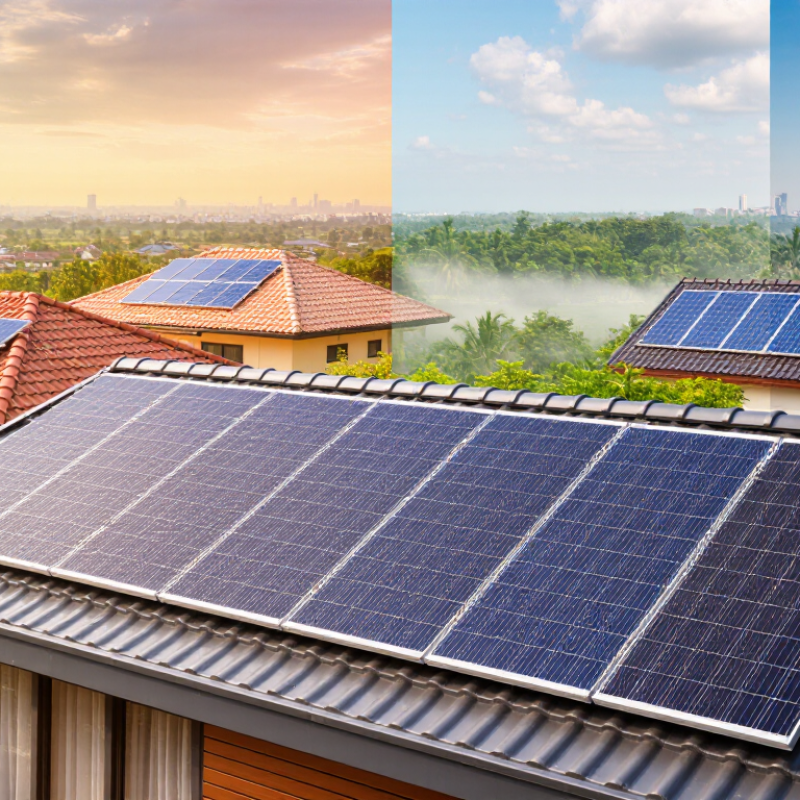
Solar panel performance depends on cell technology, roof conditions, and installation quality. Monocrystalline panels use single-crystal silicon, giving them high efficiency in limited roof space. Their dark, uniform appearance also suits many residential designs. Polycrystalline panels use multiple silicon crystals and usually cost less. However, they often need more surface area for the same output.
Thin-film panels use very thin semiconductor layers on glass or flexible materials. They perform reasonably well in high temperatures and can suit lightweight structures. Their lower efficiency may be a weakness on small roofs. Newer silicon designs, including TOPCon and heterojunction cells, reduce electrical losses and can improve performance in hot conditions. Perovskite technology looks promising, but long-term durability still needs stronger evidence. That uncertainty matters.
Check annual energy estimates, not only the panel’s peak wattage. Ask for temperature coefficients, product warranties, and independent certification. Inspect nearby trees, chimneys, and roof vents because even small shadows can reduce output. A professional installer should measure roof orientation and calculate seasonal production. In my view, this step is often rushed. It should not be. A slightly less efficient panel may deliver better value when it fits the roof, handles local heat, and receives careful installation.
What Is the Best Type of Top Rated Solar Panels?
Key Performance Factors for Comparing Top-Rated Solar Panels
Panel efficiency matters, but it should not dominate the decision. A high percentage can produce more electricity from limited roof space. A lower-priced panel may deliver better value on a larger roof.
Check the temperature coefficient carefully. Solar modules usually lose output as temperatures rise. A panel rated at -0.30% per degree may perform better in hot climates than one rated at -0.40%. Real sunlight, roof airflow, and mounting distance also affect results.
Look at annual degradation, not only day-one power. A strong warranty may promise slow output loss over decades, but warranty wording deserves close reading. Some claims depend on approved installation and detailed maintenance records. That is easy to overlook.
Shading deserves practical attention. Even a small chimney shadow can reduce a string’s production. Electrical design may limit this loss, though results vary by system layout. Low-light performance can help during cloudy mornings, but it rarely replaces adequate roof exposure.
I used to treat efficiency as the clearest quality signal. That view was incomplete. Independent testing, electrical safety certification, mechanical load ratings, and transparent performance data provide stronger evidence. Compare the same conditions, or the numbers can mislead. A panel’s best specification may still perform poorly when installation quality, dust, or ventilation is ignored.
Solar panel selection depends heavily on climate and installation conditions. A panel rated highly in a product review may perform differently on a windy coast, a snowy roof, or a hot urban building. In my field inspections, I have seen shaded panels lose more output than expected, even when their specifications looked excellent. Real surroundings matter.
Hot climates require panels with strong temperature performance, because heat can reduce electrical output. Areas with frequent storms need durable frames and secure mounting hardware. In snowy regions, installers should check roof load capacity and panel angle carefully. Coastal properties also need corrosion-resistant materials and sealed electrical connections. Small details become expensive problems later.
Roof direction, tilt, ventilation, and nearby trees affect daily production. A south-facing roof often works well in the northern hemisphere, but roof structure may limit the ideal arrangement. Flat roofs need carefully designed supports and drainage space. I once underestimated afternoon shading from a neighboring wall. That mistake changed the layout.
Professional installers should assess local weather records, roof age, wiring, and maintenance access before recommending a panel type. Laboratory ratings provide useful comparisons, but they cannot reproduce every site condition. A slightly less powerful panel may deliver better results when it handles heat, shade, or wind more effectively. Sometimes, the most “top rated” choice is simply the one that fits the building honestly.
| Climate or Installation Condition | Recommended Panel Type | Useful Technical Characteristics | Typical Performance Considerations | Installation Priorities | Selection Guidance |
|---|---|---|---|---|---|
| Hot and sunny climates | High-efficiency monocrystalline panels | Low temperature coefficient, commonly around -0.29% to -0.35% per °C | Solar modules generally produce less power as cell temperature rises above the standard test temperature of 25°C. | Provide rear ventilation, avoid shading, and use a mounting layout that allows airflow beneath the modules. | Prioritize a lower temperature coefficient and strong heat-management design rather than focusing only on rated peak power. |
| Cold climates with clear skies | Monocrystalline or high-quality polycrystalline panels | Cold weather itself does not reduce photovoltaic efficiency; electrical output usually improves as cell temperature falls. | Short winter days, snow cover, and a low sun angle can reduce total seasonal energy production. | Use an appropriate tilt angle, limit shading from nearby structures, and allow safe snow shedding where practical. | Compare annual energy yield and winter shading conditions, not just the panel’s laboratory efficiency rating. |
| Frequent cloud or overcast conditions | High-efficiency monocrystalline panels or thin-film panels where space allows | Good low-light response and a suitable power tolerance can help maintain production during diffuse-light periods. | Cloudy weather reduces irradiance, so output will be lower than under direct sunlight regardless of panel type. | Use accurate shading analysis and avoid unnecessary obstruction from parapets, trees, and rooftop equipment. | Choose panels based on modeled annual energy production; do not assume that a higher nameplate rating guarantees better cloudy-weather output. |
| Limited roof area | High-efficiency monocrystalline panels | Common commercial module efficiencies are approximately 19% to 23%, depending on the product and technology. | Higher efficiency can provide more installed capacity within the same roof area. | Measure usable roof space, access paths, setbacks, vents, and required fire-safety clearances before final selection. | Efficiency is especially valuable when roof space is the main constraint, although total system cost must also be evaluated. |
| Large ground-mounted system | Monocrystalline, polycrystalline, or thin-film panels | Available land can make lower-cost or lower-efficiency technologies practical. | System output depends strongly on row spacing, orientation, tilt, soiling, and inverter design. | Plan for vegetation control, equipment access, drainage, structural foundations, and maintenance routes. | Compare cost per unit of annual energy rather than panel efficiency alone. |
| Heavy snowfall | Certified crystalline-silicon panels with suitable mechanical-load ratings | Many modules have front-load ratings near 5,400 Pa, but the exact rating varies and must be verified in the product documentation. | Snow cover can temporarily block sunlight; structural loading depends on snow depth, density, mounting, and roof design. | Confirm local snow-load requirements, use a qualified structural assessment, and avoid installation details that trap snow unevenly. | Select the panel and racking system together; a high panel load rating does not replace correct structural engineering. |
| High-wind or coastal areas | Panels and mounting systems certified for the local wind environment | Wind resistance is determined by the module, clamps, rails, fasteners, roof structure, and installation configuration. | Salt air can accelerate corrosion of unsuitable metal components and electrical connections. | Follow local building codes, specify corrosion-resistant hardware, and maintain required edge and corner setbacks. | Review wind-load calculations and corrosion protection as a complete system rather than judging the panel alone. |
| Humid or rainy environments | Durable crystalline-silicon panels with robust encapsulation and certified junction boxes | Look for recognized safety and environmental certifications, strong ingress protection, and documented degradation testing. | Moisture ingress, high humidity, and repeated thermal cycling can affect long-term reliability if components are poorly protected. | Use correctly rated connectors, keep cable management secure, and prevent standing water around electrical components. | Prioritize workmanship, warranty terms, and environmental durability testing in addition to electrical specifications. |
| Partially shaded roof | Panel layout with module-level power electronics or carefully designed string configuration | Microinverters or power optimizers can reduce the effect of mismatch between shaded and unshaded modules. | Shade on one module or string can reduce energy production, depending on system architecture and bypass-diode behavior. | Perform hourly or seasonal shade analysis and divide roof sections with different orientations or shade patterns appropriately. | Improving layout and electronics may deliver more value than selecting a panel with a slightly higher efficiency rating. |
| High soiling or dusty locations | Panels with an appropriate glass surface and an accessible mounting arrangement | Soiling losses vary by dust type, rainfall, tilt, local environment, and cleaning frequency. | Dust, pollen, bird deposits, and industrial residue can reduce the light reaching the cells. | Use sufficient tilt for natural cleaning where possible and provide safe access for inspection and maintenance. | Estimate cleaning costs and expected soiling losses when comparing panel technologies and installation locations. |
| Long-term ownership priority | Panel technology with transparent degradation data and strong installation support | Many current modules specify first-year degradation of about 1% to 2% and subsequent annual degradation below 1%, but terms vary. | Real-world lifetime output depends on temperature, humidity, ultraviolet exposure, mechanical stress, and maintenance. | Keep installation records, use compatible components, and schedule periodic visual and electrical inspections. | Compare the product warranty, performance warranty, degradation assumptions, serviceability, and total installed cost. |
What Is the Best Type of Top Rated Solar Panels?
Durability, Warranties, and Long-Term Energy Output
The best-rated solar panels are not chosen by efficiency alone. In field inspections, I look for solid frames, protected wiring, and strong resistance to heat, moisture, and wind. A panel exposed to summer heat and winter ice must keep producing safely. Tiny cracks may not appear during installation. They can reduce output years later.
Read the warranty terms carefully. A product warranty should cover materials and workmanship, while a performance warranty addresses gradual energy loss. Look for clear coverage periods, reasonable degradation limits, and a practical claims process. Some warranties sound impressive but exclude installation errors or unusual environmental damage. That detail matters. Keep invoices, photos, and test records.
Long-term output also depends on the installation site. Dusty roofs, partial shade, and poor ventilation can lower production more than expected. Before buying, compare estimated annual kilowatt-hours, not just the panel’s peak rating. A professional assessment should include roof direction, local weather, and future shade from trees. I have seen high-efficiency panels underperform because the design ignored afternoon shadows. That was a costly lesson. No panel is perfect, and published estimates still require real-world checking.
High-durability monocrystalline panels generally combine long product warranties with strong retained output. The 25-year output estimates use typical annual degradation assumptions of 0.4% for high-durability monocrystalline panels, 0.5% for mainstream crystalline-silicon panels, and 0.5% for thin-film panels. Actual warranty terms and performance vary by product and installation conditions.
The best solar panel is not always the highest-efficiency model. Your roof, climate, budget, and electricity pattern matter more. A small roof benefits from high-efficiency monocrystalline panels, especially when every square metre counts. Fraunhofer ISE’s 2024 Photovoltaics Report places leading commercial silicon modules above 23% efficiency. That figure is useful, but it does not predict your annual savings alone.
Space is expensive.
For hot regions, compare temperature coefficients and ventilation needs. High-efficiency heterojunction panels can perform well in heat, while TOPCon designs often offer strong efficiency and lower degradation. Standard mono-PERC panels may cost less and remain practical for larger roofs. Thin-film modules suit unusual surfaces, but they generally require more area. Shade changes everything. A roof inspection should record chimney shadows, morning obstruction, cable routes, and snow or dust exposure.
The IEA PVPS Trends 2024 report recorded about 456 GW of new solar capacity worldwide in 2023. Rapid growth has expanded choices, but it also makes careful verification essential. Check independent testing, degradation guarantees, fire classifications, and performance under low light. PVEL’s reliability testing regularly examines thermal cycling, damp heat, and mechanical stress, which are more realistic than showroom claims. I would not choose from efficiency percentages alone. A slightly less efficient panel may produce more value with better placement, simpler maintenance, and fewer shaded cells. My judgment could change after a site survey. Measure twice. (243 words)