Choosing solar panels for home in 2026 requires more than comparing wattage and discounts. Your roof, electricity use, climate, and installation quality matter equally. According to IRENA’s Renewable Capacity Statistics 2025, global solar capacity reached about 1,865 gigawatts by the end of 2024. This growth improves product availability, but it also creates confusing choices.
Location matters. A 430-watt panel may produce less energy than expected under shade, dust, or poor orientation. The International Energy Agency’s Renewables 2024 report expects solar PV to drive most new renewable capacity through 2030. That trend supports stronger technology and wider consumer choice. However, global growth does not guarantee that every household receives a good installation. Local sunlight data remains essential.
This guide focuses on measurable decisions. Check annual energy production, temperature coefficient, warranty terms, degradation rates, and installer experience. The U.S. Department of Energy’s National Renewable Energy Laboratory commonly models modern PV systems with roughly 0.5% yearly degradation, although real results vary. A long warranty sounds reassuring, but its claim process deserves equal attention. Read the fine print.
You should also compare the panel’s dimensions with usable roof space. A narrow roof may benefit from higher-efficiency modules. A shaded roof may need professional design before purchasing anything. Batteries can improve resilience, but they add cost and maintenance considerations. There is no perfect panel. Even careful estimates can miss future electricity use, weather changes, or roof repairs. A reliable choice balances performance, price, safety, and evidence rather than chasing the highest advertised output.
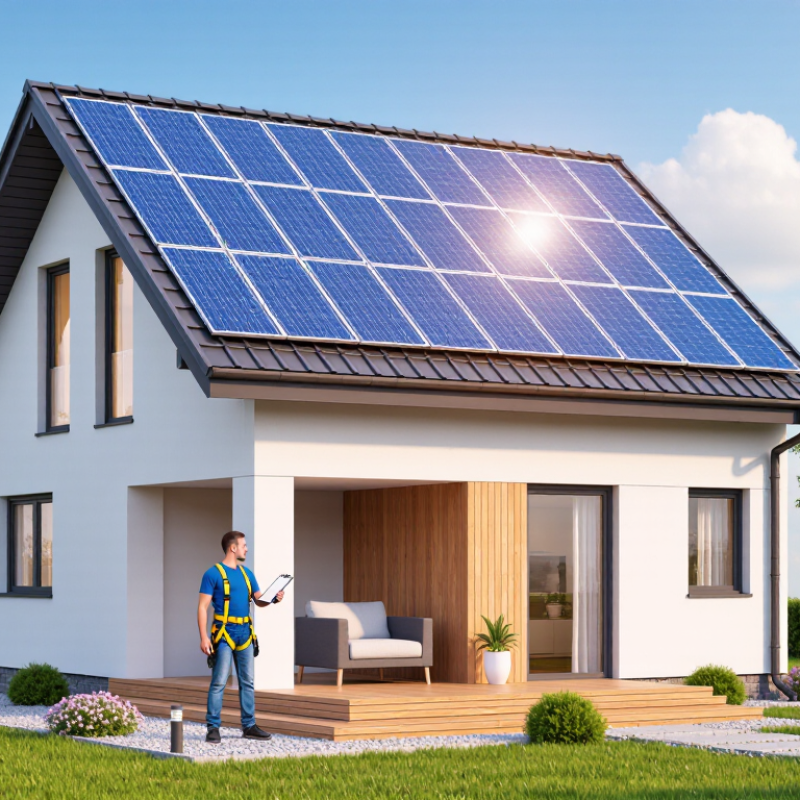
Begin with your actual electricity use, not a neighbor’s panel count. The U.S. Energy Information Administration reported average residential consumption of about 899 kilowatt-hours monthly in 2022. Your household may differ sharply. Check twelve months of utility bills and mark seasonal peaks. Air conditioning, electric heating, water heating, and charging equipment can change the calculation.
Measure the roof carefully. Note usable roof area, orientation, pitch, and afternoon shade from trees or nearby buildings. The National Renewable Energy Laboratory’s PVWatts tool estimates production using local weather and system losses. A 6-kilowatt system may produce very different annual energy in Phoenix and Seattle. That difference matters.
Think in kilowatt-hours, not panel wattage alone. Divide your target annual energy by expected yearly production, then allow space for wiring, temperature, dust, and inverter losses. The International Energy Agency’s Photovoltaic Power Systems Programme recorded more than 400 gigawatts of new solar capacity globally in 2023, showing how quickly technology is changing. Still, newer specifications do not erase site limitations.
Review hourly consumption if possible. A home using most electricity after sunset may need storage or better load scheduling. I would also challenge optimistic estimates. Roof shading changes, bills fluctuate, and future appliances add demand. Leave a modest design margin, but avoid buying excess capacity that your roof, budget, or local rules cannot support.
Choosing solar panels in 2026 means comparing more than the headline efficiency percentage. Monocrystalline silicon panels usually offer strong output in limited roof space. Recent Fraunhofer ISE Photovoltaics Reports place commercial crystalline-silicon modules broadly around 20% to 23% efficiency. Thin-film panels often deliver lower efficiency, commonly near 10% to 19%, but they can perform steadily in some hot or low-light conditions.
Efficiency is only one measurement. The International Energy Agency Photovoltaic Power Systems Programme reported that global photovoltaic additions reached about 456 gigawatts in 2023. This rapid expansion has supported better n-type silicon designs, including advanced contact structures. However, panel ratings are measured under laboratory conditions. Your roof faces heat, dust, shading, and changing angles. Check the temperature coefficient, warranty degradation rate, and low-light behavior. Small details matter.
Measure the usable roof area carefully. A higher-rated panel may produce more electricity from each square meter. A lower-rated panel may still suit a large, partly shaded roof. I would not select the highest number automatically. That shortcut can overlook heat losses and inverter limits. The U.S. National Renewable Energy Laboratory efficiency chart also shows a wide gap between laboratory cells and commercial products. Treat that gap realistically. Ask for an annual energy estimate based on local weather, roof direction, and shading. It is less exciting than a record efficiency figure, but usually more useful.
Comparison of representative residential solar panel technologies by typical module efficiency.
Choosing solar panels for a home in 2026 starts with the roof, not the panel brochure. A roof should have enough remaining life to avoid removing new equipment too soon. Inspect shingles or tiles, flashing, gutters, and visible sagging. A qualified installer can check structural capacity and attachment points. This often matters more than a small efficiency difference. I once saw a south-facing roof lose much of its value because a nearby tree shaded it every afternoon. Direction helps, but it is not the whole answer.
Track sunlight across the roof during different seasons. Winter shadows can stretch farther than expected. Chimneys, vents, dormers, and neighboring buildings may create narrow shaded bands. Ask for an hourly shade analysis instead of relying on a quick midday visit. Panel output also changes with roof pitch, temperature, and local weather. Do not assume a clear summer day represents yearly production. A conservative estimate is more useful, although professional forecasts still contain uncertainty.
Tips: Measure usable roof space after excluding walkways, skylights, setbacks, and safety clearances. Keep a simple roof sketch and mark shaded areas. Compare annual production with your household’s daytime and evening use. If space is limited, higher-output panels may help, but they can cost more. Leave room for maintenance access. I prefer planning around the least sunny month, not the most impressive month. That choice feels cautious, yet it may reduce disappointment later. Ask for written assumptions, warranty terms, and projected losses before signing anything.
Choosing solar panels in 2026 starts with numbers, not appearance.
Measure your annual electricity use, roof direction, shading, and usable roof area. A 6-kilowatt system may produce very different savings in Arizona and northern Germany. NREL’s 2024 cost benchmark placed residential solar near $3.15 per watt before incentives. That means a 6-kilowatt installation could approach $18,900 before local adjustments.
Prices vary widely. Request at least three written quotes.
Calculate payback with realistic production. Multiply expected annual kilowatt-hours by your electricity rate, then subtract maintenance and financing costs. Include battery replacement risk. The IEA’s Renewables 2024 report confirms solar remains the fastest-growing renewable power source, but household economics still depend on local tariffs and export rules.
Eligible homeowners may receive tax credits or rebates, yet 2026 programs can change. Check government portals, not sales claims. A 30% incentive, where legally available, could reduce an $18,900 system to $13,230. If annual savings reach $1,200, simple payback is about eleven years. That estimate ignores electricity-price changes.
Tips:
How to Choose Solar Panels for Home in 2026?
Choosing solar panels is not only about efficiency or appearance. In home assessments, I have seen excellent panels underperform because installation details were ignored. Compare output ratings, temperature performance, warranty terms, and expected degradation over time. Your roof angle, shade, local weather, and electricity use matter just as much. A slightly less efficient panel may perform better on a shaded roof.
Choose a reliable installer with proven residential experience. Ask for licensing, insurance, project references, and a clear written contract. The proposal should explain panel placement, wiring, permits, safety checks, expected production, and payment stages. Do not accept vague promises. A good installer will inspect your roof before recommending equipment. They should also explain who handles repairs if a component fails. I would question any company that pressures you to sign immediately.
Tips
Request at least three detailed quotations. Check recent customer feedback, not only testimonials on the installer’s website. Ask how they monitor system performance after activation. Schedule an annual visual inspection, especially after severe storms. Keep records of production, invoices, warranties, and maintenance visits. Dust may reduce output, although frequent cleaning is not always necessary. I once underestimated tree growth near a roof; seasonal shading became a costly lesson. Leave room in your budget for roof repairs, inverter replacement, or changing household electricity needs.
| Evaluation Dimension | Typical 2026 Range or Requirement | Why It Matters | Homeowner Action |
|---|---|---|---|
| Panel technology | Monocrystalline: approximately 19%–23% module efficiency; thin-film: approximately 10%–15% | Higher efficiency produces more electricity from limited roof space. | Choose higher-efficiency modules when roof area is restricted; compare total installed cost, not efficiency alone. |
| Rated power | Common residential modules: approximately 350–500 watts per panel | Rated power helps determine how many panels are needed for the target system size. | Match the system size to annual electricity use, roof space, shading, and local grid rules. |
| Annual degradation | Typically about 0.3%–0.8% of output per year; many modules retain roughly 80%–90% of initial output after 25–30 years | Lower degradation can improve long-term energy production. | Request the exact performance warranty and verify whether the degradation rate is linear or stepped. |
| Temperature coefficient | Power coefficients commonly range from approximately −0.25% to −0.40% per °C above the rated test temperature | Panels generally produce less power as cell temperature rises. | Give greater weight to temperature performance in hot climates or on roofs with limited airflow. |
| Shading performance | Partial shading can reduce production substantially; module-level power electronics can limit losses in some designs | Trees, chimneys, neighboring buildings, and roof obstructions can affect system output. | Require a site-specific shade analysis and an hourly or monthly production estimate. |
| Roof orientation and tilt | A shade-free roof facing toward the equator generally performs well; exact results depend on latitude, tilt, and local weather | Orientation and tilt affect annual sunlight capture and seasonal generation. | Confirm roof condition, usable area, azimuth, tilt, and shading before approving the design. |
| Product warranty | Common coverage is approximately 10–25 years, depending on the product and contract | It covers specified manufacturing defects, but exclusions and claim procedures vary. | Read exclusions, labor coverage, transfer terms, proof-of-purchase rules, and response procedures. |
| Inverter service life | Many residential inverters are expected to operate for approximately 10–15 years; replacement may occur before the panels | The inverter is a key electronic component and can affect future maintenance costs. | Ask about warranty length, replacement labor, monitoring, and expected replacement pricing. |
| Installer credentials | Required local license, electrical and building permits, proof of insurance, and demonstrated residential experience | Correct design, permitting, and installation reduce safety, code, and warranty risks. | Verify licensing with the relevant authority and request references for completed projects of similar size. |
| Proposal transparency | Proposal should state system size in kW, estimated annual kWh, equipment quantities, assumptions, exclusions, and payment schedule | Clear assumptions make competing quotes easier to compare. | Obtain at least three itemized proposals using the same electricity-use assumptions. |
| Routine maintenance | Usually low maintenance; visual inspection and performance monitoring are recommended, with cleaning based on local soiling and rainfall | Dust, pollen, bird droppings, snow, and debris can reduce production. | Monitor monthly, keep vents and equipment clear, and use qualified personnel for roof work or electrical repairs. |
| Monitoring and alerts | System-level or module-level monitoring may provide daily energy data and fault notifications | Early detection can reduce the duration of underperformance. | Confirm who receives alerts, how faults are handled, and whether monitoring remains available after installation. |
| Long-term service plan | Plan for periodic inspections, possible inverter replacement, roof access needs, and end-of-life recycling or disposal | A solar system is a long-term asset that may outlast the original installer relationship. | Keep contracts, permits, electrical diagrams, warranty documents, and production records in one secure location. |
Note: Performance ranges are typical residential-market values and vary by design, climate, installation quality, local regulations, and contract terms.