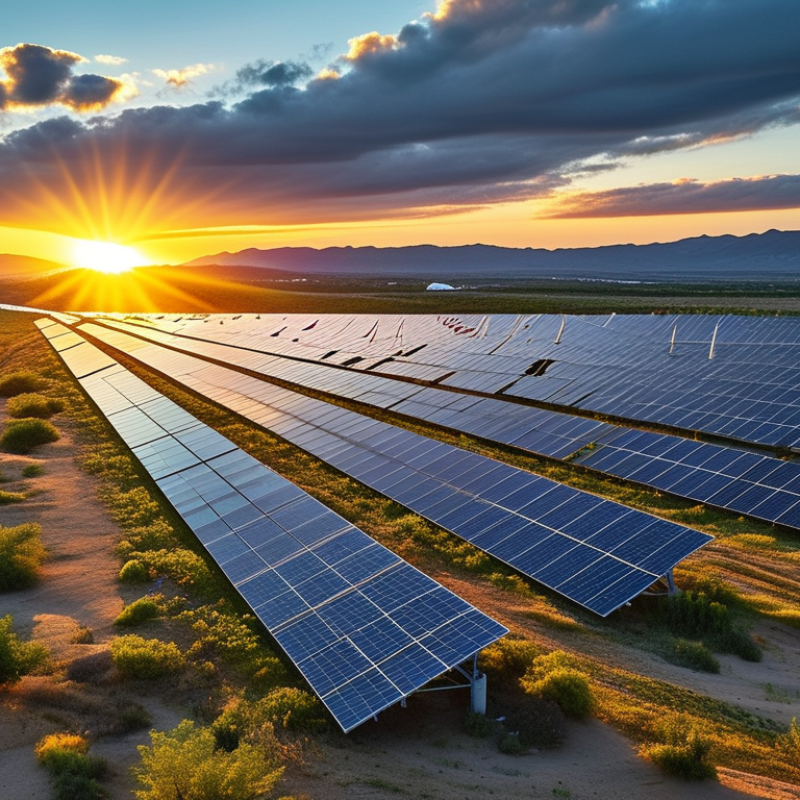
Sun energy is the radiant power delivered by the Sun, traveling across space as light and heat. It reaches rooftops, fields, deserts, and oceans every day. Photovoltaic panels convert sunlight into electricity through semiconductor cells. Solar thermal systems capture heat for water, buildings, or industrial processes. The principle sounds simple. The engineering is not.
According to Fatih Birol, Executive Director of the International Energy Agency, “Solar is the new king of electricity.” His statement reflects the rapid growth of solar generation and falling technology costs. However, reliable understanding requires more than enthusiasm. Sun energy changes with clouds, seasons, location, and nighttime. A panel may produce strongly at noon, then stop after sunset. Batteries, grid connections, careful forecasting, and complementary power sources can reduce this variability. Small details matter. Dust can lower output. Shade can affect an entire panel string. Poor installation can shorten equipment life.
Understanding sun energy also means looking beyond panels. Manufacturing requires materials, energy, transport, and responsible recycling. A well-designed system should match local sunlight, electricity demand, roof strength, maintenance access, and safety standards. My own view is more cautious than the usual advertising language: solar power is powerful, but it is not effortless or universal. It works best when technical evidence guides the design. This article explains how sunlight becomes usable energy, why performance varies, and what households and businesses should examine before investing. Some assumptions may need revision as storage, grid technology, and solar materials continue to develop.
Sun energy is the radiation released by the Sun. It begins deep inside the solar core, where hydrogen nuclei fuse into helium under extreme heat and pressure. This reaction releases energy as light and infrared radiation. After travelling about 150 million kilometres, sunlight reaches Earth in roughly eight minutes.
At the top of Earth’s atmosphere, incoming sunlight averages about 1,361 watts per square metre, according to NASA’s Earth Fact Sheet. Clouds, dust, and atmospheric gases reduce the amount that reaches the ground. A sunny roof may receive strong radiation, while a shaded wall receives very little. Location matters greatly.
Solar panels use photovoltaic cells to convert light into direct-current electricity. Solar thermal systems capture sunlight as heat instead. The International Energy Agency reported that global solar photovoltaic capacity increased by about 375 gigawatts in 2023, bringing worldwide capacity close to 1.6 terawatts. This growth shows practical value, but capacity is not the same as constant power. Panels produce less electricity at night, during storms, and when dirt covers their surfaces.
The basic process sounds simple. It is not always predictable. Seasonal sunlight, local weather, roof angle, and grid conditions can change actual output. IEA Photovoltaic Power Systems data also indicates that solar electricity is expanding rapidly, although storage and transmission remain important technical challenges. One detail is often overlooked: sunlight is abundant, but converting it efficiently requires careful engineering.
What Is Sun Energy and How Does It Work?
How Sunlight Travels from the Sun to Earth
Sunlight begins deep inside the Sun, where nuclear fusion releases enormous amounts of energy. That energy moves outward as electromagnetic radiation, including visible light, infrared radiation, and ultraviolet radiation. Individual packets of energy are called photons. They travel through space at about 300,000 kilometers per second. Space is mostly empty. Light needs no air to cross it. Sunlight takes roughly eight minutes and twenty seconds to reach Earth. This delay means we never see the Sun exactly as it is now.
When sunlight reaches Earth, the atmosphere changes its path and strength. Clouds can reflect much of it back into space. Air molecules scatter shorter blue wavelengths, helping create the daytime sky’s color. Some ultraviolet radiation is absorbed high above the ground. The surface receives the remaining light as warmth and usable energy. The angle matters too. Direct rays concentrate energy over a smaller area, while slanted rays spread it out. Seasons depend partly on this difference, not simply on Earth’s distance from the Sun.
I often picture sunlight as a straight stream, but that image is incomplete. Photons can be reflected, absorbed, or scattered before reaching the ground. Their paths are less tidy than a simple diagram suggests. Careful measurements of radiation, atmospheric conditions, and surface temperature help scientists estimate how much energy arrives. Even those estimates contain uncertainty, especially when clouds change quickly.
What Is Sun Energy and How Does It Work?
How Solar Panels Convert Light into Electricity
Sunlight carries energy in tiny packets called photons. When photons strike a solar cell, they transfer energy to electrons in a semiconductor. The cell’s internal electric field pushes these electrons in one direction. This movement creates direct current, or DC electricity. A single cell produces limited power, so many cells connect inside a panel. Several panels can form an array on a roof or open structure. The familiar dark surface is not simply collecting heat. It is managing light and charge.
An inverter changes the panel’s DC output into alternating current, the form used by most household appliances. Wires then carry electricity to lights, pumps, and other loads. If production exceeds demand, a battery may store the surplus, or an approved grid connection may receive it. Output changes with sunlight angle, cloud cover, dust, temperature, and shading. Shadows matter. Even a small obstruction can reduce a connected string’s performance. A careful installer checks orientation, ventilation, wiring, and safety devices before energizing the system.
Measured performance rarely matches a simple estimate. Real roofs have chimneys, seasonal sun, and occasional maintenance needs. The process is elegant, but not perfect. Panels can lose efficiency as temperatures rise, while inverters and batteries also have operating limits. Monitoring data helps identify unusual drops in voltage or daily generation. It also encourages a useful question: is low output caused by weather, equipment, or a design assumption that needs revisiting?
How solar panels convert light into electricity under standard test conditions
Standard test conditions use sunlight irradiance of 1,000 watts per square meter. Typical crystalline-silicon photovoltaic modules convert about 15% to 23% of incoming sunlight into electricity, producing approximately 150 to 230 watts per square meter. Photons transfer energy to electrons in the semiconductor, and the built-in electric field directs those electrons to create a usable electric current. The remaining energy is mainly reflected or released as heat.
Sun energy is the radiation that travels from the Sun to Earth. It arrives as light and heat, even on cool days. The main forms of sun energy are photovoltaic, solar thermal, and passive solar energy. Each form serves a different practical purpose.
Photovoltaic systems use semiconductor cells to convert sunlight into electricity. When light strikes a cell, it releases electrons and creates an electric current. This power can operate lamps, pumps, appliances, and communication equipment.
Solar thermal systems capture heat instead. Dark collectors can warm water for showers, kitchens, hospitals, or industrial processes. In some regions, concentrated sunlight produces high temperatures for electricity generation. The equipment needs careful design because clouds, dust, and seasonal changes reduce output.
Passive solar energy uses building design rather than complex machinery. Windows facing suitable directions can bring winter sunlight indoors. Thick walls, shaded windows, and thermal materials help control indoor temperature. Sun energy also supports crop drying, greenhouse production, water treatment, and small cooking systems. These uses can reduce fuel consumption, but they are not equally effective everywhere. A shaded roof may produce little electricity. Batteries also add cost and material demands. The division between these forms is helpful, though not perfect. Real projects often combine them, and their results depend on local weather, orientation, maintenance, and daily energy needs.
What Is Sun Energy and How Does It Work?
Sun energy comes from electromagnetic radiation released by the Sun. Solar panels convert light into direct-current electricity through photovoltaic cells. An inverter then changes it into alternating current for homes and businesses. On a clear afternoon, a rooftop can quietly power lights, appliances, and cooling equipment.
Its benefits are measurable. The International Renewable Energy Agency reported 1,419 gigawatts of global solar photovoltaic capacity by the end of 2023. Solar also added about 346 gigawatts that year, showing rapid expansion. During operation, panels produce no direct combustion emissions. The Intergovernmental Panel on Climate Change reports that solar power generally has much lower lifecycle emissions than coal and natural gas. It can also reduce electricity bills, especially when systems match daytime demand. Small systems may improve energy access in remote areas.
The limitations are equally real. Output falls during clouds and stops after sunset. A cloudy afternoon exposes the weakness. Batteries and stronger grids can help, but they increase project costs and material needs. Panels also require suitable roofs or land, careful installation, and eventual recycling. The International Energy Agency notes that permitting, grid connection, and supply-chain concentration can slow deployment. I have seen performance estimates look impressive before shading and dust were measured. That is a useful warning: solar energy is practical, but results depend on local weather, maintenance, storage, and honest site assessment.
| Dimension | Real-World Data or Description | How It Works or Why It Matters | Benefits | Challenges and Considerations |
|---|---|---|---|---|
| Definition | Sun energy is the electromagnetic radiation released by the Sun, including visible light, infrared radiation, and ultraviolet radiation. | Solar technologies capture sunlight and convert it into useful heat or electricity. | A naturally replenished energy resource that is available across most regions of the world. | Its strength varies with location, season, weather, time of day, and shading. |
| Solar Energy Reaching Earth | Approximately 1,361 watts per square meter at the top of Earth's atmosphere | This average value is known as the solar irradiance or solar constant. | Shows the large amount of energy available from sunlight before atmospheric and surface losses. | Clouds, dust, atmospheric absorption, reflection, and the angle of sunlight reduce the energy received at the surface. |
| Photovoltaic Conversion | Common commercial photovoltaic modules typically convert about 15%–23% of incoming sunlight into electricity. | Semiconductor cells absorb photons and release electrons, creating direct-current electricity. | Produces electricity without combustion, moving fuel, or direct air pollution during operation. | Output decreases with heat, dirt, shading, aging, and low-light conditions; efficiency varies by technology and design. |
| Solar Thermal Conversion | Solar thermal systems use sunlight to heat water, air, or another working fluid. | Heat can be used directly for water heating, space heating, industrial processes, or electricity generation through a turbine. | Direct heat use can avoid conversion losses associated with producing electricity first. | Thermal systems require suitable sunlight, heat-transfer equipment, maintenance, and sometimes insulated storage. |
| Daily Availability | Solar electricity generation is limited to periods when sufficient sunlight is available. | Generation generally rises after sunrise, peaks around midday, and falls to zero after sunset. | Generation often coincides with daytime cooling and commercial electricity demand. | Nighttime generation is unavailable, and cloudy or rainy weather can reduce production substantially. |
| Capacity Factor | Utility-scale solar photovoltaic projects commonly achieve roughly 15%–30%, depending on location, tracking, and system design. | Capacity factor compares actual annual output with the output that would result from operating at full power continuously. | Useful for comparing solar generation with other power technologies on an annual basis. | It is lower than the nameplate rating because sunlight is variable and systems do not operate at maximum output all the time. |
| Energy Storage | Batteries can store excess daytime electricity for use later; other options include pumped hydro, thermal storage, and hydrogen. | Storage shifts energy from periods of high solar production to periods of higher demand. | Improves reliability, reduces curtailment, and can provide electricity after sunset. | Storage adds cost, material requirements, energy losses, space needs, and eventual replacement or recycling requirements. |
| Grid Integration | Solar generation can be combined with grid connections, demand management, forecasting, storage, and other generation sources. | Grid operators balance variable solar output with electricity demand and available supply. | Well-planned systems can diversify electricity supply and reduce dependence on fuel-based generation. | High solar penetration may require stronger transmission networks, flexible demand, advanced controls, and improved forecasting. |
| Operational Emissions | Solar photovoltaic and solar thermal systems produce no direct carbon dioxide emissions while generating electricity or heat. | Energy is produced without burning coal, oil, gas, or other fuels during operation. | Helps reduce air pollutants and greenhouse-gas emissions compared with fossil-fuel generation. | Manufacturing, transport, construction, maintenance, and end-of-life processing still create lifecycle emissions. |
| Lifecycle Emissions | Lifecycle greenhouse-gas emissions for solar power are generally far lower than those of fossil-fuel power and are commonly reported in the tens of grams of CO₂-equivalent per kilowatt-hour. | Lifecycle assessments include raw materials, manufacturing, transport, installation, operation, and disposal or recycling. | Most emissions occur before operation, with no fuel combustion during generation. | Results vary according to manufacturing energy sources, equipment lifetime, efficiency, location, and recycling practices. |
| Water Use | Photovoltaic systems require little water during electricity generation, although water may be used for manufacturing and panel cleaning. | Solar PV does not need a steam cycle for routine electricity production. | Can reduce pressure on freshwater resources compared with many thermal power stations. | Dry or dusty locations may require cleaning, while concentrating solar thermal plants can have higher cooling-water needs. |
| Land and Siting | Solar installations may use rooftops, parking canopies, previously developed land, deserts, farmland, or floating platforms. | Panels must be positioned to receive adequate sunlight and avoid excessive shading. | Rooftop and built-environment projects can generate electricity without requiring new ground-level land. | Large projects can affect habitats, landscapes, agriculture, drainage, and local land-use priorities. |
| Materials and Manufacturing | Solar equipment uses materials such as glass, aluminum, steel, silicon, copper, polymers, and other industrial materials. | Materials are processed into cells, modules, mounting structures, cables, inverters, and control equipment. | Manufacturing improvements can reduce material intensity and improve energy payback over time. | Mining impacts, supply-chain concentration, manufacturing energy use, and material recovery require responsible management. |
| Energy Payback | Many solar photovoltaic systems repay the energy used in their manufacture and installation within approximately 1–3 years, depending on technology and location. | After the energy-payback period, the system continues producing electricity with comparatively low operational energy requirements. | Supports a favorable long-term energy balance over a typical multi-decade service life. | Payback varies with module type, solar resource, system design, manufacturing conditions, and maintenance. |
| Typical Service Life | Solar photovoltaic modules are commonly designed to operate for about 25–30 years or longer, while inverters may need replacement sooner. | Performance gradually declines rather than stopping suddenly at the end of the design period. | Long operating periods spread manufacturing and installation impacts over many years. | Degradation, severe weather, component failures, and recycling or disposal must be planned for. |
| Main Benefits | Renewable supply, low operating emissions, modular deployment, low fuel costs, and reduced exposure to fuel-price volatility. | Solar can be installed at different scales, from small rooftops to large power plants. | Expands energy options and can support cleaner electricity and heat production. | Benefits depend on proper siting, grid planning, maintenance, financing, and responsible end-of-life management. |
| Main Challenges | Variability, storage needs, transmission requirements, land-use conflicts, upfront investment, and recycling logistics. | These issues arise because sunlight is intermittent and solar equipment requires physical infrastructure. | Many challenges can be reduced through diversified generation, storage, forecasting, efficiency, and thoughtful planning. | No single solution removes all limitations; local climate, grid conditions, regulations, and community priorities matter. |

Data ranges are general global estimates. Actual performance depends on climate, system design, technology, orientation, maintenance, grid conditions, and project location.