

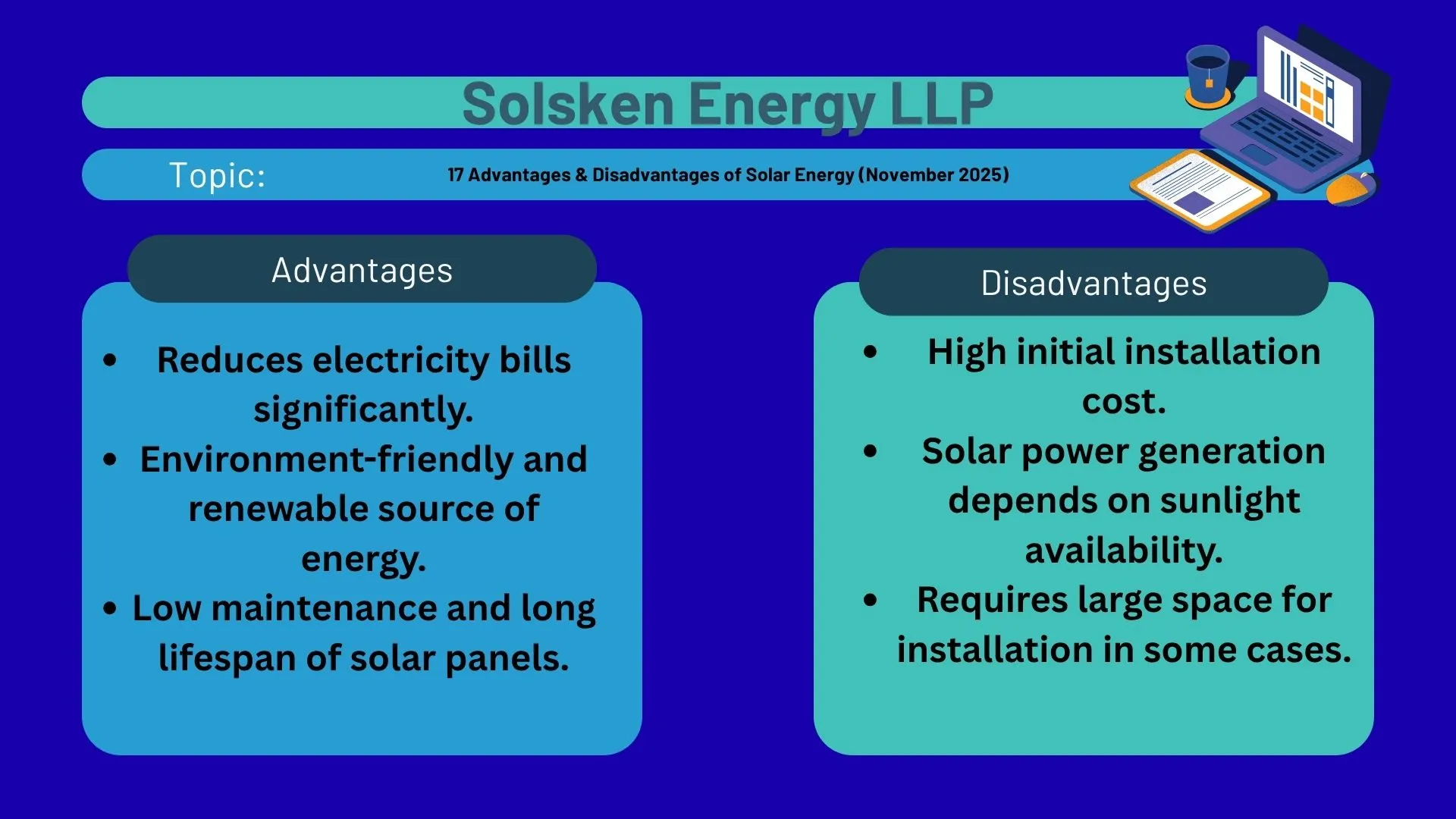
17 Advantages & Disadvantages of Solar Energy (November 2025)
As the world continues to embrace sustainable living, understanding the 17 Advantages & Disadvantages of Solar Energy (November 2025) becomes more important than ever. Solar energy has rapidly grown into one of the leading renewable power sources, offering both environmental and financial benefits. However, like any technology, it comes with its own set of challenges. In this blog, we’ll explore the major pros and cons of solar power to help you make an informed decision about adopting this clean energy solution.
This guide explores the 17 Advantages & Disadvantages of Solar Energy (November 2025) to help you understand whether investing in solar power is the right choice for you.
What is Solar Energy?
Solar energy is the power harnessed from the sun’s rays using solar panels or photovoltaic (PV) cells. These systems convert sunlight into electricity that can be used to power homes, offices, and industries. As one of the cleanest energy sources, solar power helps reduce dependency on fossil fuels and minimize carbon emissions — a key factor in the global shift toward renewable energy.
10 Major Advantages of Solar Energy (2025)
Let’s begin with the solar energy benefits that make it an attractive and future-proof investment.
1. Renewable and Sustainable Source
One of the biggest solar energy benefits is that it’s renewable — sunlight is abundant and won’t run out anytime soon. Unlike fossil fuels, solar energy will remain a consistent source of power for billions of years.
2. Reduces Electricity Bills
By generating your own electricity, you significantly lower your monthly utility expenses. Many homeowners in 2025 are saving up to 70% on their electricity costs with solar panels for homes.
3. Low Maintenance Costs
Once installed, solar panels require minimal maintenance. Occasional cleaning and a yearly check-up are usually enough to keep them running efficiently.
4. Government Subsidies and Tax Benefits
Governments across the world, including India, offer attractive incentives, rebates, and tax credits for installing solar power systems. This makes switching to renewable energy more affordable.
5. Environmentally Friendly
Among all solar energy benefits, this is perhaps the most important. Solar power produces no air pollution, greenhouse gases, or harmful emissions, helping fight climate change.
6. Increases Property Value
Properties with solar installations often have higher resale value. Homebuyers today see solar panels as a smart, long-term investment.
7. Energy Independence
Solar energy allows homeowners to produce their own power, reducing dependency on the grid and protecting against rising electricity rates.
8. Scalable Technology
Solar power systems can be customized — from small home setups to large industrial projects — making them ideal for diverse applications.
9. Job Creation in the Green Sector
The growing demand for solar technology has led to new employment opportunities in manufacturing, installation, and maintenance.
10. Supports Battery Storage Solutions
Modern solar systems can now be paired with high-capacity batteries, allowing users to store excess energy for nighttime or cloudy days.
7 Disadvantages of Solar Energy (2025)
Despite its benefits, there are a few disadvantages of solar energy to consider before making an investment.
1. High Initial Cost
Although long-term savings are substantial, the upfront cost of installing a solar power system — including panels, inverters, and wiring — can be expensive.
2. Weather Dependent
Solar panels depend on sunlight. On cloudy or rainy days, their efficiency drops, which can impact total power generation.
3. Space Requirement
Large solar setups require sufficient roof or land space for installation, which might be challenging for smaller properties.
4. Energy Storage Can Be Costly
While battery storage is a big advantage, it remains relatively expensive. Investing in batteries increases the overall system cost.
5. Manufacturing Impact
Although solar energy is clean, manufacturing panels involves certain chemicals and processes that have environmental footprints.
6. Energy Conversion Efficiency
Even in 2025, most solar panels convert only around 20–25% of sunlight into electricity. This means efficiency improvements are still ongoing.
7. Difficult to Relocate
Once installed, relocating solar panels to a new home can be complex and may involve additional costs.
Balancing the Advantages & Disadvantages
When we look at the 17 Advantages & Disadvantages of Solar Energy (November 2025), it’s clear that the positives far outweigh the negatives. The long-term savings, energy independence, and environmental impact make solar energy a practical and future-ready choice. The initial investment may seem high, but with subsidies, lower maintenance, and increasing technology efficiency, solar power continues to grow as the best renewable option.
Why 2025 is the Right Time to Go Solar
The year 2025 marks a turning point for renewable energy. Advancements in solar panel manufacturing, battery storage, and smart grid integration have made solar energy more accessible and cost-effective. Governments and organizations are actively supporting solar adoption, and more people are realizing the unmatched solar energy benefits of going green.
Switching to solar today not only helps reduce your carbon footprint but also future-proofs your home or business against energy price fluctuations.
Final Thoughts
The 17 Advantages & Disadvantages of Solar Energy (November 2025) highlight the potential of this renewable source to reshape the future of global energy. While some limitations exist, technological progress continues to address them rapidly.
Whether you’re a homeowner looking to reduce bills or a business striving for sustainability, solar energy is a smart investment. Its environmental impact, economic benefits, and long-term potential make it one of the most promising energy solutions of our time.