Benefits of Solar Panels for Global Buyers What to Know?
As the world shifts toward sustainable energy, many global buyers are considering the benefits of solar panels. These systems harness sunlight to generate electricity, reducing reliance on fossil fuels. Buyers not only enjoy lower energy bills but also contribute to environmental preservation.
Choosing to invest in solar technology demands thoughtful consideration. While the upfront costs may seem daunting, the long-term savings can be significant. Solar panels often pay for themselves over time, especially with government incentives. However, some buyers overlook potential maintenance costs, which can affect the overall savings.
The benefits of solar panels extend beyond individual savings. Communities also gain from reduced carbon footprints, leading to healthier ecosystems. Despite these advantages, it's crucial for buyers to engage in thorough research. Understanding the local climate, regulations, and technology options is essential for maximizing benefits. Ultimately, thoughtful engagement in solar energy can reshape our approach to energy consumption for future generations.

Understanding Solar Panels and Their Functionality
Solar panels are fascinating devices transforming sunlight into electricity. They consist of photovoltaic cells that convert solar energy into usable power. These panels are usually made of silicon, which is abundant and efficient. When sunlight hits the cells, an electric current is generated. This current can power homes, businesses, and even electric vehicles.
Understanding how solar panels work is crucial for buyers. The efficiency of panels can vary. Some perform well in cloudy weather, while others excel in direct sunlight. The installation angle is also important. Ideally, panels should face south in the Northern Hemisphere. Poor placement can lead to less energy generation, which is a common oversight.
Buyers should consider energy storage systems. Batteries store excess electricity for later use, making solar energy more reliable. However, not all systems are equal. Some may require regular maintenance and can be costly. It’s essential to research carefully. Seeking expert advice can help navigate these complexities and make informed decisions. The renewable energy landscape is ever-evolving, and staying informed will lead to better choices.
Key Benefits of Solar Panels for Global Consumers
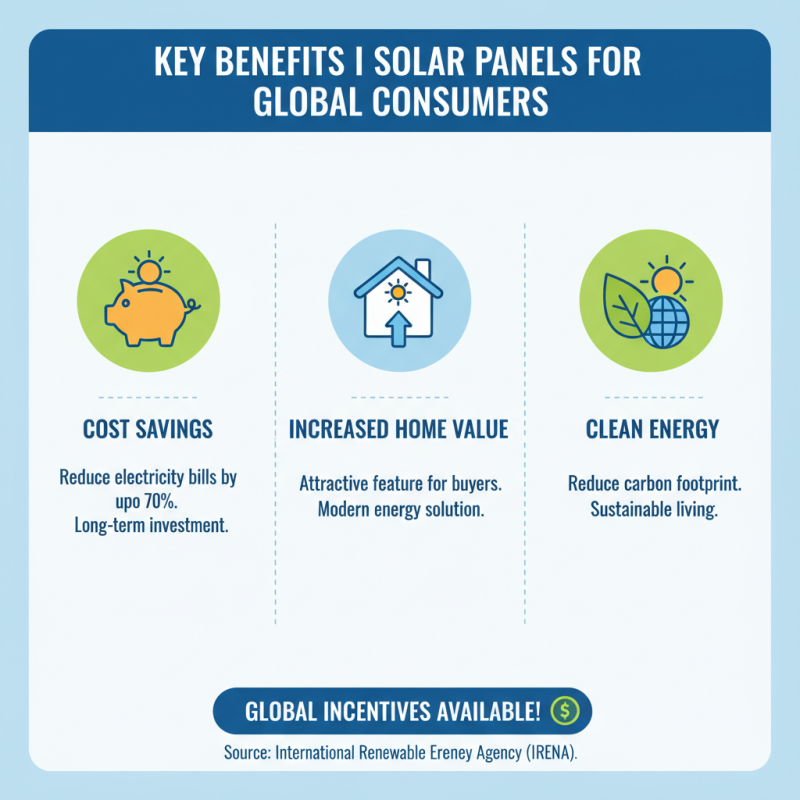
Solar panels are becoming popular among global consumers for various reasons. One significant benefit is cost savings. According to the International Renewable Energy Agency, solar energy can reduce electricity costs by up to 70%. This encourages homeowners and businesses to invest in this clean energy source. Additionally, countries are offering incentives for solar panel installations, which can further lower expenses.
Another key advantage is environmental impact. The use of solar energy helps decrease carbon footprints. The U.S. Department of Energy states that solar power can reduce greenhouse gas emissions significantly. Adopting solar energy contributes to a healthier planet for future generations. Reports indicate that one megawatt of solar power can save over 1,500 tons of carbon dioxide emissions annually.
Tips: When considering solar panels, research your local regulations. Incentives vary by region, and staying informed can maximize your savings. Regular maintenance is also essential; a clean panel operates at peak efficiency. Remember, not all installations require extensive land—many rooftops are ideal for this technology.
Cost Analysis: Initial Investment vs. Long-term Savings
Investing in solar panels can seem daunting. The initial costs may be high, often ranging from thousands to tens of thousands of dollars. Many buyers hesitantly weigh this upfront investment against the potential long-term savings. However, understanding the cost over time is crucial for informed decision-making.
Long-term, solar panels can offer substantial savings. Homeowners can reduce or even eliminate electricity bills. In many regions, government incentives can further offset the initial costs. These incentives often include tax credits and rebates, allowing for a quicker return on investment. Yet, not every installation guarantees a significant decrease in energy costs. Factors such as location, sunlight exposure, and energy consumption habits impact overall savings.
Environmental benefits should also not be overlooked. Opting for solar energy reduces dependence on fossil fuels. However, it’s vital to consider maintenance costs and panel lifespan. Some homeowners may face unexpected repair expenses. Thus, potential buyers need to conduct thorough research before making a commitment. Understanding both the advantages and challenges of solar panels can lead to a more thoughtful investment.
Benefits of Solar Panels for Global Buyers: What to Know? - Cost Analysis: Initial Investment vs. Long-term Savings
| Country |
Initial Investment (USD) |
Average Annual Savings (USD) |
Payback Period (Years) |
Expected Lifespan (Years) |
| USA |
15,000 |
1,200 |
12.5 |
25 |
| Germany |
12,000 |
1,000 |
12 |
30 |
| Australia |
11,000 |
900 |
12.2 |
25 |
| Canada |
14,000 |
1,100 |
12.7 |
25 |
| India |
5,000 |
350 |
14.3 |
20 |
Environmental Impact: How Solar Panels Contribute to Sustainability
Solar panels play a crucial role in promoting sustainability. They convert sunlight into electricity, reducing reliance on fossil fuels. This shift is essential for minimizing greenhouse gas emissions. Solar energy systems can significantly lower carbon footprints for both homes and businesses.
The installation of solar panels can have a profound impact on local environments. Reduced air pollution leads to healthier communities. However, the manufacturing process for solar panels can generate waste. It is vital to consider recycling options when the panels reach the end of their lifespan. Every effort counts in the fight against climate change.
While solar energy is abundant, it is not without challenges. Solar panels require ample space and sunlight. Areas with limited sunlight may need supplemental energy sources. Balancing these factors is key for optimal energy production and sustainability.
Benefits of Solar Panels for Global Buyers
Solar panels offer significant benefits, including reducing CO2 emissions, providing energy cost savings, creating jobs, conserving water, and minimizing land use. This chart illustrates some key metrics that highlight the positive impact of solar energy on the environment and economy.
Considerations for Choosing the Right Solar Panel System
When considering the right solar panel system, buyers should focus on efficiency ratings. According to the National Renewable Energy Laboratory, high-efficiency panels can reach over 22% conversion efficiency. This means more power generation per square foot. Efficiency is crucial, especially for limited roof space.
Another important aspect is the warranty. Industry reports suggest that a robust warranty can indicate the panel's longevity. Most quality panels come with a 25-year performance guarantee. Systems with shorter warranties may reflect lesser reliability.
Cost is also a huge consideration. While lower-priced panels might save money upfront, they can lead to increased costs over time through replacements or repairs. A complete analysis of the total cost of ownership is essential. Buyers should factor in installation costs, maintenance, and potential savings from incentives. Understanding energy needs can dictate the system size. Larger systems often lead to better savings, but they also require more upfront investment. Prioritizing these details can help buyers make an informed choice in an ever-evolving market.